
Concrete driveway building in Sioux City IA - a slab that sits flat and sheds water
Driveway cracked, sinking or holding water by the garage? We build a new one on a packed base that sits flat and drains right.
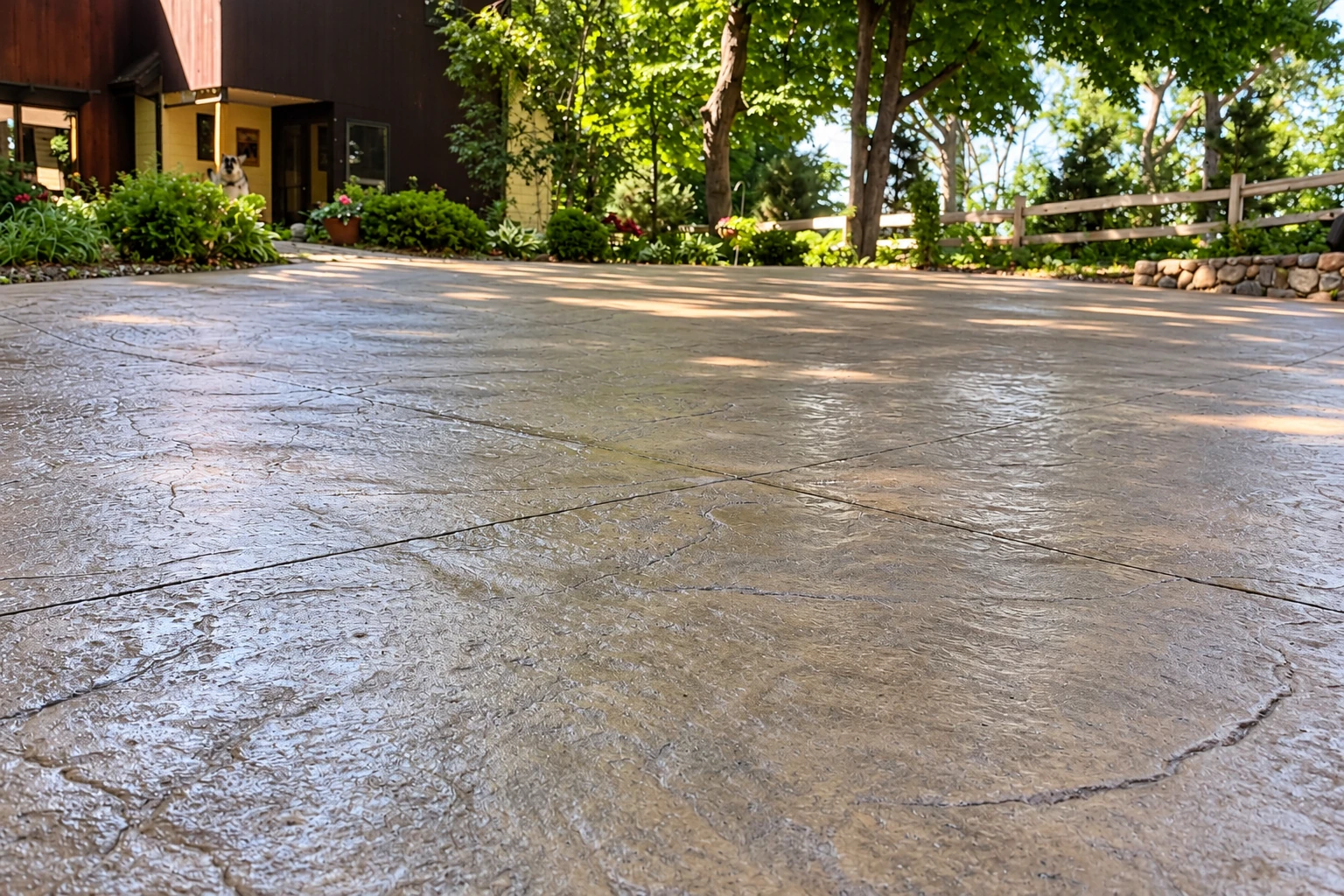
Concrete driveway building in Sioux City starts with the part nobody sees. We tear out the old slab if there is one, get the ground underneath ready, set forms and pour ready-mix into them. Most people call because their driveway cracked, sank by the garage or holds a puddle that freezes. Usually the concrete wasn't the problem. The base under it was.
The price moves with the size, how much old concrete comes out, how much base the ground needs and any curb work. The schedule turns on the city's form inspection and the weather, since a cold-weather pour should wait for a stretch that stays above freezing until the slab isn't soaked anymore. We pull the permit, and the written estimate I leave gives you your own numbers. Want a back slab too? We pour patios as well.
How we build a concrete driveway
- A dug-out, packed base. We dig out the soft dirt and pack a gravel base, because a slab only stays as flat as its subgrade, the ground it sits on.
- Air-entrained mix for winter. We order an air-entrained mix for driveways, and its tiny air bubbles give freezing water room to expand instead of building stress in the slab. Ask every bidder for it by name.
- Joints and a broom finish. We cut control joints, shallow grooves that give the slab a planned place to crack, and leave a broom finish, a light texture that gives tires and boots grip.
- I'm there on pour day. I look at the job myself before anything gets written up, and I'm on site running the crew the day we pour.
- In business since 2021. We've been in business since 2021, and I learned most of this trade by doing things right the second time. Your driveway gets the first-time version.
- Licensed and insured for your job. We're fully licensed and insured. A crew and a loaded concrete truck are about to be on your property, so ask anyone bidding to show you both.
Why old driveways crack and sink
| Problem | What it looks like | Usual fix |
|---|---|---|
| Base that settled | What it looks like: Slab dropped by the garage or a lip at the street | Usual fix: Tear out, dig down and pack a new base |
| Water running the wrong way | What it looks like: Puddles on the slab or water running toward the garage | Usual fix: New slab set to fall away from the house |
| Flaking, dusty surface | What it looks like: Top layer peeling or powdering, worst where the salt landed | Usual fix: Replace with air-entrained mix, poured out of the midday heat |
| Cracks in random places | What it looks like: Cracks wandering across panels instead of following the grooves | Usual fix: New slab with control joints cut on time |
Seal, replace a section or start over
- Seal the cracks. If the slab is still flat and draining and the cracks are thin, sealing them buys time. I'd rather tell you that than sell you concrete you don't need.
- Replace a section. When one panel sank or the approach at the street broke up, we cut out just that piece along a joint and pour it back on a new base.
- Start over. When the whole slab sinks or holds water, we start over. On a tight budget, put the money in the base before a stamped finish, since you can't fix the base later.
How a driveway job runs
- I come out and measure. After you call or send the form, I come out, measure and leave a written estimate. It's priced for the 6-inch minimum the city sets on permitted driveways.
- Permit and prep. We pull the permit, prep the ground and set the forms at a grade that sends water away from your house, not toward it.
- Form inspection. The city must see the forms before any pour, and a skipped inspection can mean tearing the slab out, so we book it before the truck.
- Pour and finish. Before we pour, we grind down a full curb for the approach, since the city wants no cut into the street. Then we pour, finish and cut joints.
- Walk-through and cure. I walk the job with you before we call it done. Then it cures, slowly gaining strength, and you keep the car off until I say so.
Keeping a new driveway sound
Most of what keeps a driveway sound is settled before the pour, in the base, the mix and the joints. After that it's down to what goes on it, so for that first winter we leave you a short note on what to put on it and what to keep off.
We're based in Sioux City and pour driveways for homeowners here and in the cities around it, including South Sioux City, Sergeant Bluff, Le Mars and Vermillion, plus some builders and small business owners. Call (712) 202-0664 or send us the details to ask for an estimate.
Tell us about your driveway
Send the address, a rough driveway size and any building permit you have. We reply within one business day and set a time for me to come measure.
(712) 202-0664- Free on-site estimate
- Measured and written up
- No pressure, no obligation
Driveway questions we get most
Do I need a city permit for a new driveway in Sioux City?
Yes, for any driveway work in the right-of-way, the strip of public land along the street where your approach meets the curb. The city's Engineering Division issues the permit, and the city's 2021 guidance says a new home with a building permit still needs one, free when you bring the building permit in.
How much does a new concrete driveway cost in Sioux City?
Concrete driveway building across the US usually costs about $7 to $11 per square foot. That's a national range for the work, not our price, since tear-out and base work differ on every lot. Your own number comes from the written estimate I leave after measuring.
How do I protect a new concrete driveway in its first winter?
Use plain sand instead of ice melt that first winter. The city gave owners of driveways built in 2024 that advice, following the state concrete paving association. After that, a national concrete group warns that ammonium sulfate, ammonium nitrate and magnesium-based salts destroy concrete surfaces, so check the bag.
Does a concrete contractor need to be registered in Iowa?
Yes, if they earn at least $2,000 a year from construction. Iowa has them register with the state Department of Inspections, Appeals, and Licensing, and only people working on their own property are exempt, so ask any driveway bidder whether they're registered.