
Concrete retaining walls in Sioux City IA - built to drain and hold the slope
Wall leaning, cracking or bulging toward the yard? We build concrete retaining walls with drainage behind them so water doesn't pile up against the concrete.
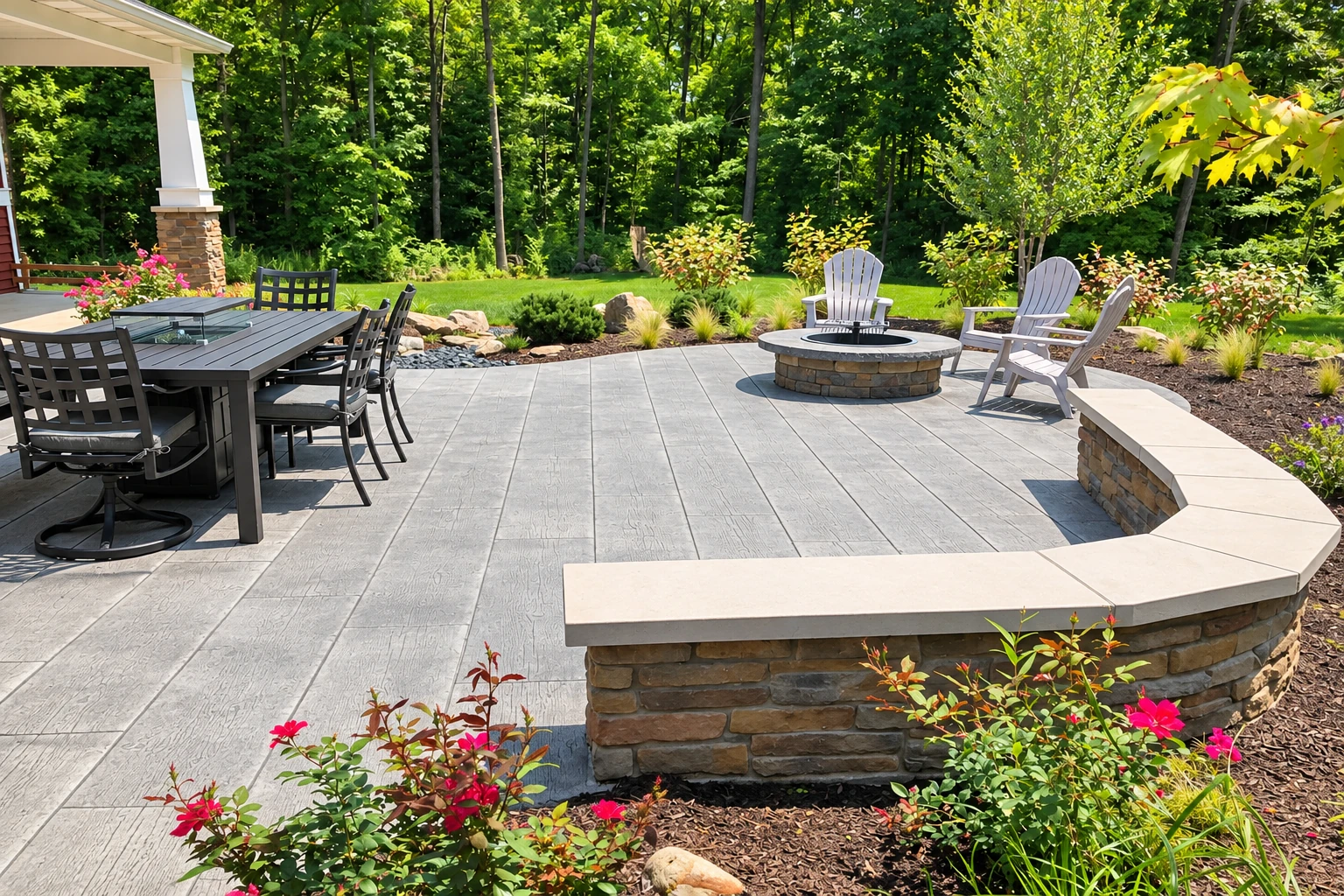
A concrete retaining wall holds back a slope so you get flat, usable ground below it. Most walls I'm called to in Sioux City are leaning, cracked or wet at the bottom, and it's nearly always water. When nothing behind the wall lets water drain down, it piles up and pushes, so the drainage behind ours gets as much attention as the face you see.
The price mostly follows the wall's height and length, how much dirt comes out and goes back in, and how easy the spot is to reach. Height drives the schedule too, because taller walls in Sioux City need a permit and, past a certain point, an engineer's drawings, so we start that early. Walls often come with other work, like leveling a yard for a concrete pool deck or holding back the dirt beside a walkout ahead of concrete floor installation.
What goes into our concrete retaining walls
- Gravel, fabric and drain pipe. Clean gravel goes against the back of the wall, filter fabric keeps fine soil out of it, and a wrapped perforated pipe along the base carries the water away.
- Braced forms and rebar. We brace the forms so they don't bow under wet concrete, tie in rebar, the steel that takes the push from the dirt, and pour when the weather suits it.
- I'm there for the pour. I come out to look at the wall myself, and I'm on site running the crew when we pour. We've been doing this since 2021.
- Fully licensed and insured. We're fully licensed and insured. Sioux City doesn't license contractors itself, so it has them register with the State of Iowa and post a $10,000 bond before it issues building permits.
What goes wrong with retaining walls
| Problem | What it looks like | Usual fix |
|---|---|---|
| Leaning wall | What it looks like: Top of the wall tipping out toward the yard or driveway | Usual fix: Tear out and rebuild with drainage behind it |
| Cracks across the face | What it looks like: Cracks that grow or shift out of line every spring | Usual fix: Seal it if it's stable, rebuild if it's moving |
| Clogged weep holes | What it looks like: Small holes near the bottom stay dry while the ground behind stays soggy | Usual fix: Clear them, then fix the drainage behind the wall |
| Washouts at the ends | What it looks like: Dirt spilling around the ends or out under the wall after rain | Usual fix: Rebuild the ends and steer the runoff elsewhere |
Repair, rebuild a section or start fresh
- Repair. This suits a wall that's still standing straight and is just cracked or draining poorly. If sealing cracks and clearing the drains will do it, I'll tell you so.
- Rebuild a section. This suits a long wall where one stretch has tipped or washed out, so we take that part down to the base and rebuild it with drainage.
- New poured wall. This suits a wall leaning along its whole length, or a slope that never had one, because a new wall lets us build the drainage in from the bottom.
How a wall job runs
- I come out and measure. Once you call or send the form, I come out, measure the slope, listen to what you want and leave a written estimate that spells out the drainage.
- Permit and paperwork. We pull the permit and book the inspections. The city's engineers ask for at least 2 business days to review it and want any drainage easement shown.
- Dig, drain and pour. Buried lines get marked through 811 before we dig. Then we form and pour the footing and wall, and build the drainage in as we backfill.
- Walk it together. I walk the finished wall with you before we call it done, and we clean up the site and haul off the leftover dirt.
What keeps a retaining wall doing its job
What keeps a wall sound is water leaving from behind it. Keep downspouts and yard runoff aimed away from the top, and if the ground behind stays soggy for days after a rain, call us before the pressure builds. Every wall we build is backed by our satisfaction guarantee.
We build walls for homeowners all over Sioux City, along with some small businesses and builders, and we work across the cities around it, like South Sioux City and Sergeant Bluff. If a slope is giving you trouble, call or send the form and I'll come out for a free estimate.
Tell us about your wall
Send the wall's height, length and any drainage easement you know of on the lot. We reply within one business day, and I come out to measure, with no obligation.
(712) 202-0664- Free estimate on site
- Written up after I measure
- No pressure, no obligation
Retaining wall questions we get
How much does a concrete retaining wall cost in Iowa?
Statewide pricing puts a retaining wall in Iowa at about $30 to $40 per square foot. That's what the market usually charges, not our price, and the height, length, digging and drainage behind your wall move your number. I'll measure and write it up on site.
Do I need a permit for a retaining wall in Sioux City?
Yes, Sioux City lists retaining walls over 48 inches among projects that need a permit, reviewed by the City Engineering Division. From 4 to 6 feet, measured from the bottom of the footing, the wall needs to be an engineered wall system built to the maker's specs, so for a poured wall, call the division at 712-279-6324 to ask how yours is reviewed.
Why does drainage matter so much behind a retaining wall?
Poor drainage is by far the most common reason retaining walls perform poorly, and left alone it can end with a wall that fails. Weep holes help, but they clog and freeze, so the real work is the gravel, fabric and pipe behind the wall. Ask every contractor whether their quote includes all three.
What changes for a retaining wall over 6 feet tall in Sioux City?
Your permit application needs drawings stamped by a licensed Iowa professional engineer, plus a site plan showing property lines, buildings, the wall's location and setbacks. Line up the engineer before you apply, since the application can't go in without those drawings. If your wall needs them, we help you get that started early.