
Stamped concrete services in Sioux City IA - pattern and color chosen to suit your slab
Plain gray slab, or an old patio that's cracked and faded? We pour, stamp and seal a new one that looks like stone or brick.
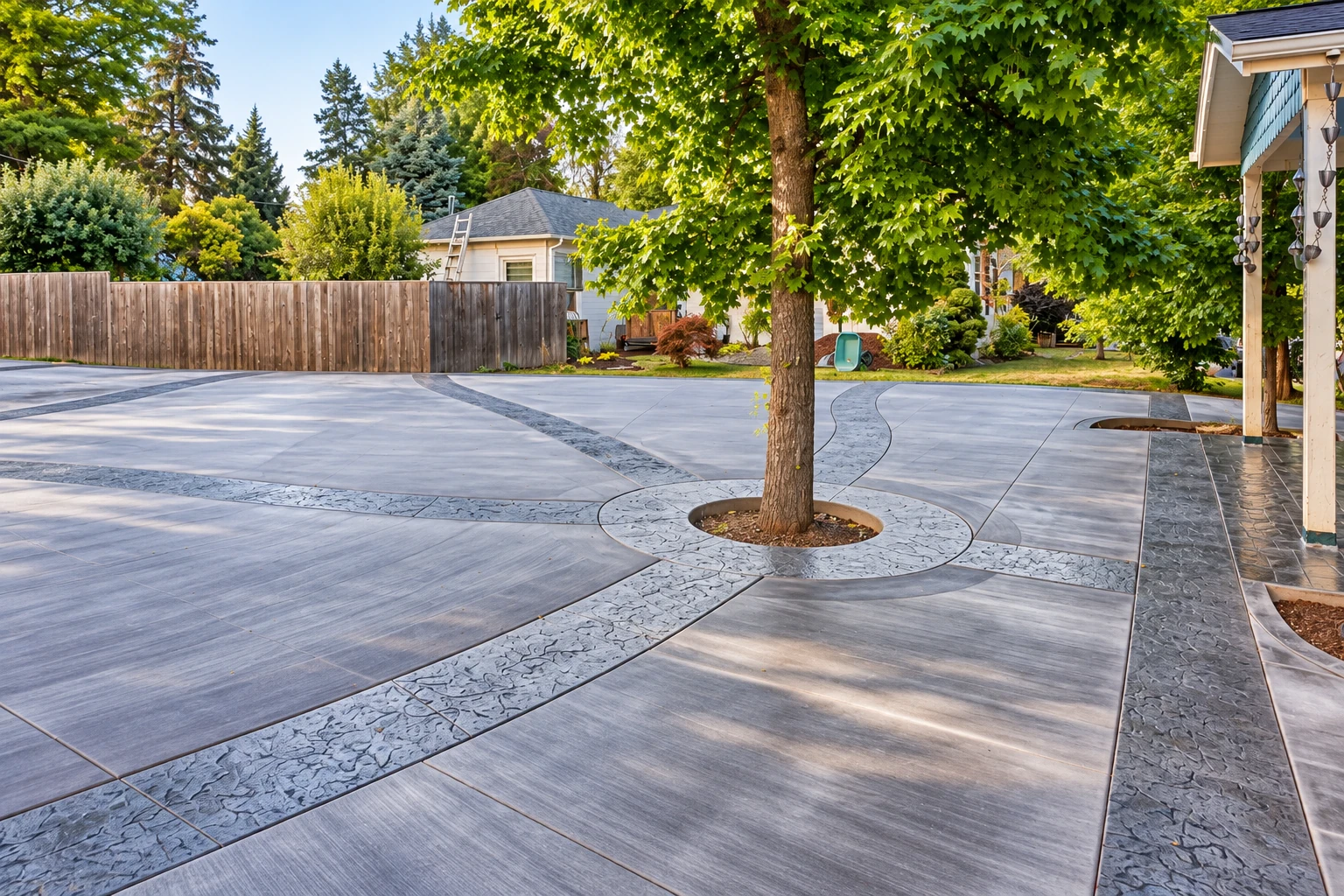
Stamped concrete is a regular pour that gets colored, then pressed with rubber mats while it's still soft, so it comes out looking like stone, brick, wood or tile before we seal it. Most of the stamped concrete calls we get in Sioux City, IA start with a plain patio somebody's tired of looking at, or an old stamped slab that's faded, flaking or sinking at one corner.
The price moves with the size, the pattern, how many colors you want and whether old concrete has to come out first. The schedule turns on the weather, on curing, which is the wait while the slab hardens before you use it, and on any city permit, which we pull ourselves. I measure on site and write it all up for you.
What our stamped concrete work covers
- A dug-out, packed base. We dig out and pack the base under the slab, not rake it level, because concrete settles with what's under it. That's the usual first budget cut, and I won't make it.
- Joints cut on time. We cut control joints, shallow grooves that give the slab a planned place to crack, early enough that any crack follows our line instead of wandering across your pattern.
- I run the crew on pour day. We've been pouring since 2021. I come out to look at the job myself, and I'm on site running the crew when we pour.
- Licensed and insured on every job. Iowa's state rules cover all construction contractors, with exceptions such as someone working on their own property. We're fully licensed and insured.
What goes wrong with stamped concrete
| Problem | What it looks like | Usual fix |
|---|---|---|
| Dull, faded color | What it looks like: Color looks washed out and water soaks in instead of beading. | Usual fix: Clean it and reseal when the surface needs it. |
| Sealer buildup | What it looks like: Cloudy white haze or a thick, peeling film on top. | Usual fix: Strip the old layers, then reseal. |
| Flaking surface | What it looks like: Top skin peeling off in patches, often where ice melt sat. | Usual fix: Patch small spots, or repour with a freeze-resistant mix. |
| Sinking or cracked slab | What it looks like: Sections dropping, cracks across the pattern, water pooling toward the house. | Usual fix: Tear out, rebuild the base and repour. |
Reseal, add on or start over
- Clean and reseal. Suits a slab that's still flat and sound but looks tired, since a fresh seal keeps out water, de-icing salt and stains and brings the color back up.
- Add a stamped section. If the main slab is solid, we can add a stamped border, landing or new section, or redo the front walk to go with it.
- Tear out and repour. Best when the slab has sunk, cracked through or tips toward the house, because stamping over a bad base just gives you a nicer-looking crack.
How we plan and pour it
- I come measure. I come out, measure, check where the water runs and listen to the look you want, then leave you a written estimate.
- Permit and base. If you go ahead, we check with the city, pull any permit the job needs, then dig out and pack the base and set the forms.
- Form inspection. On Sioux City sidewalk and driveway permits, the city inspects the forms before the pour, and work poured without it can be torn out, so we wait.
- Pour, stamp, cut joints. We pour, color and press the mats while the concrete is soft, then cut the control joints before it can crack on its own.
- Seal and walk-through. Once it's cured we seal it and clean up, and I walk the job with you before we call it done.
Looking after a stamped slab once it's in
What keeps a stamped slab sound is mostly decided before you ever see it, in the packed base and the joints cut on time. After that, your part is going easy on ice melt the first winter and resealing when the surface asks for it, not before.
Most of our calls come from homeowners in Sioux City, with some small business owners and builders mixed in, and we work across the cities around it, including South Sioux City and Le Mars. We also pour garage floors. Call or use the form to ask for an estimate.
Tell us about your slab
Send the slab's size and whether any of it runs out by the street. We'll reply within one business day and set a time to come measure.
(712) 202-0664- Free on-site estimate
- Written up after I measure
- No pressure, no obligation
Stamped concrete questions we get
Which stamped concrete color method is best for a driveway?
Color hardener, a dry color shaken over the top, is the usual pick for driveways because it gives rich color and a harder wear surface. The catch is that a deep chip shows gray, while integral color, mixed all the way through, hides chips better but won't reach the deepest tones. I'll walk you through both on site.
How often does stamped concrete need to be resealed?
Reseal it when it needs it, not on a set schedule. The signs are color that's lost its depth or water that soaks in instead of beading. Sealing more than that builds up a film that's slow and costly to strip, so we'd rather you skip the every-spring reseal for extra shine.
Do I need a permit for stamped concrete in Sioux City?
You need a city permit for any part of the job in the public right-of-way, such as the public sidewalk, and the city's Engineering Division issues it. Its rules for that permit say all surfaces must be smoothed to an even finish and textured with a broom. For everything else, we check with the city, pull any permit needed and book the inspections.
How much does stamped concrete cost in Sioux City?
Installed stamped concrete in Sioux City usually costs about $13 to $26 per square foot. Where yours lands depends on the pattern, the number of colors, the base work and whether old concrete comes out first. I'll measure and give you a written estimate on site.
Is ice melt bad for a new stamped concrete driveway?
Ice melt can flake the surface of new concrete, and entrained air, tiny bubbles built into the mix, helps resist that and freeze-thaw damage, so ask whether your mix has it. For the 2024 season the city advised owners of new driveways and sidewalks to use plain sand the first winter.