
Concrete steps construction in Sioux City IA - steps that stay put through winter
Steps sinking, cracking or pulling away from the door? We rebuild them on a packed base so they sit steady and even.
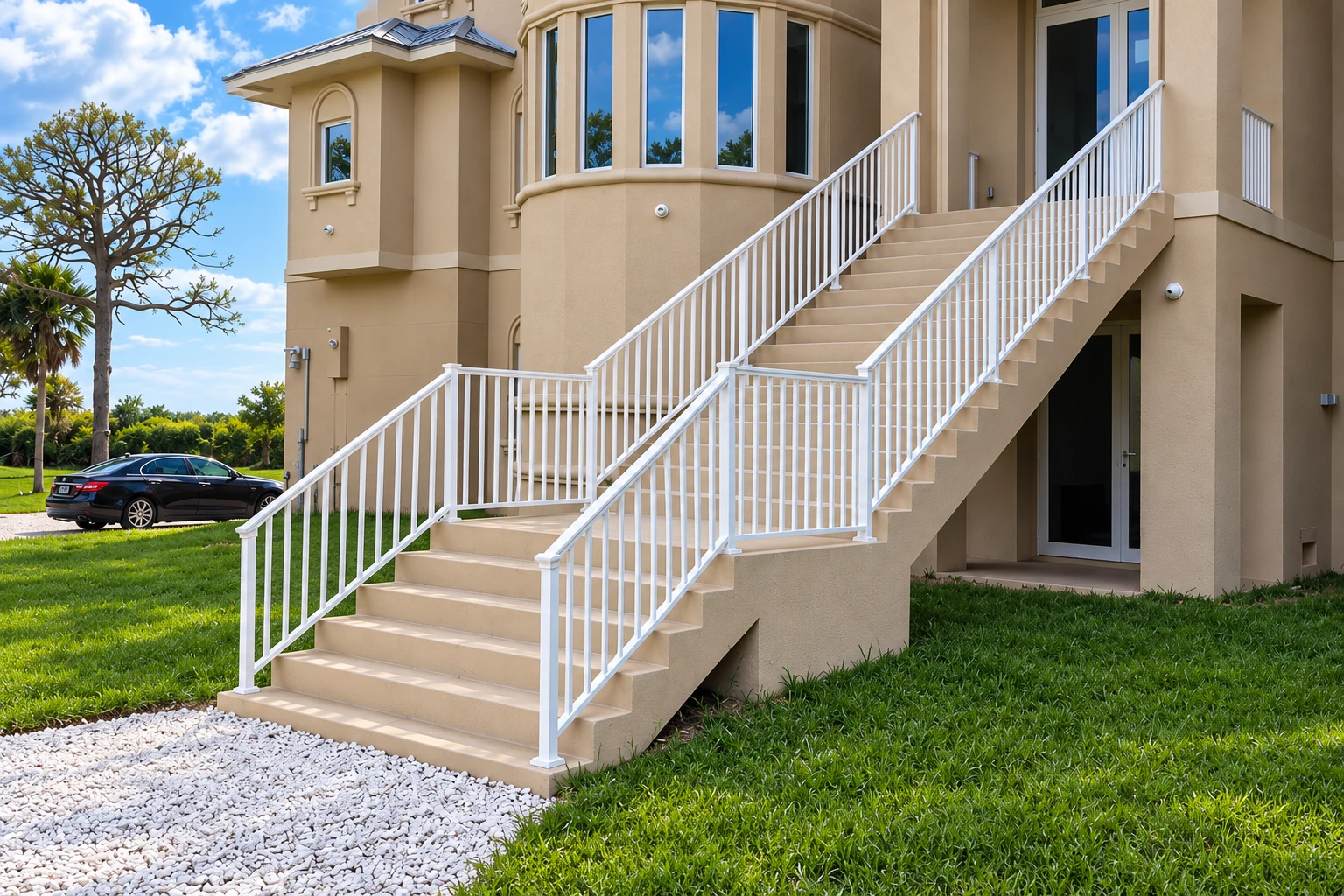
Concrete steps construction in Sioux City usually starts with a call about steps that have sunk, cracked or tipped toward the house. New steps can sit on the ground, tie into a landing or your house's foundation, or span as a stair, and that support decides what goes under them and inside them. Most bad steps I look at were set on loose fill, and the fill won.
Price mostly turns on how many steps you need, whether the old ones come out first and what the new ones tie into. The schedule turns on the weather, since we time the pour away from a hard freeze, and on any permit or form inspection the city wants. If the budget's tight, spend it under the steps, not on a fancy finish, because the base is what keeps them level. My written estimate gives you your own figure.
What goes into our concrete steps
- A packed base, not fill. Steps are only as steady as what's under them, so we dig out and pack a real base instead of setting them on loose fill that settles with the dirt.
- Grip on wet treads. We give outdoor steps a broom finish, a brushed texture pulled across the fresh concrete, so they keep their grip in rain and snow instead of going slick.
- I'm there for the pour. I come out to look at the job myself, and I'm on site running the crew when we pour. We've been doing this since 2021.
- Licensed and insured. Iowa requires anyone earning $2,000 or more a year from construction to register with the state, so ask any crew about it. We're fully licensed and insured.
What goes wrong with old steps
| Problem | What it looks like | Usual fix |
|---|---|---|
| Sinking steps | What it looks like: Steps tipped toward the house or a gap at the door | Usual fix: Tear out, pack a real base, repour |
| Flaking surface | What it looks like: Top layer scaling off in patches, worst where salt landed | Usual fix: Replace with a mix made for freezing winters |
| Uneven step heights | What it looks like: One step taller or shorter than the rest, so people trip | Usual fix: Lay out every step and rebuild |
| Cracked or pulled loose | What it looks like: Cracks through the steps or a gap opening at the landing | Usual fix: Rebuild on solid support with rebar holding it together |
Patch, precast or pour new
- Patch and repair. If the steps are level and solid and just chipped at the edges, a patch can buy time, and I'll tell you if that's all you need.
- Precast steps. Factory-made steps get set in place, but they're heavy and can sink in loose soil, so one maker's guide wants a concrete pad under them, even for one step.
- Tear out and pour. When steps have sunk or cracked through, we tear them out and pour new ones, and on a new house we tie them into the slab foundation.
How your steps get built
- Call or send the form. Call (712) 202-0664 or send the form with a few photos, and we'll set a time for me to come out.
- I measure and write it up. I look at the steps and the ground, listen to what you want and leave you a written estimate before anything gets torn out.
- Permit and layout. We pull any permit the job needs and lay out every step from the door to the ground before the forms go up, since a small miss repeats on every step.
- Form check, then the pour. Under the city's sidewalk and driveway permit, forms get inspected before the pour, or the work can be ordered torn out. Then we pour and finish.
- Curing and walk-through. The new steps need time to cure, slowly hardening before they take foot traffic, and I walk the job with you before we call it done.
Keeping new steps sound after we leave
What keeps new steps sound is mostly what lands on them in winter. The city passes along advice to use plain sand the first winter on a new sidewalk or driveway, and I'd treat new steps the same way. After that, skip deicers made with ammonium sulfate, ammonium nitrate or magnesium-based salts, because they eat concrete surfaces.
We build steps for homeowners, small business owners and builders in Sioux City and the cities around it, including South Sioux City and Sergeant Bluff. If yours are sinking or flaking, call or send the form and I'll come out to give you an estimate.
Tell us about your steps
Send photos of your steps, how many there are and whether they meet a sidewalk or driveway. We reply within one business day to set a visit.
(712) 202-0664- Free on-site estimate
- Written up, no obligation
- Measured in person by me
Questions about concrete steps
How much do concrete steps cost in Sioux City?
Across the US, installing poured concrete steps usually costs about $200 to $500 per step, so take that as a national range rather than a Sioux City quote. Tearing out old steps, how high you're climbing and what the steps tie into move it up or down. I'll measure and write up your own number.
Will new concrete steps hold up to Sioux City winters?
They can, if the mix is made for it. Concrete guidance calls air entrainment, tiny, evenly spread air pockets that give freezing water room, a key durability measure where concrete gets soaked and freezes over and over. Ask whether your mix includes it before you hire anyone.
When is the best time to pour concrete steps in Iowa?
Pour during a stretch when freezing temperatures won't follow right behind. Industry guidance urges caution with outdoor concrete placed in late fall, winter or early spring if it may freeze soon after while it's still soaked. We watch the forecast and set the pour date around it.
Do I need a permit for concrete steps in Sioux City?
Check with the city, because its permit list names sidewalks and driveways and not steps on their own. The Engineering Division issues sidewalk and driveway permits, and building permits go through Inspections and Permit Services. On our jobs, we make that call for you.